
Finding your information
Are you an urban or rural electricity customer?
2 min read
Residential electricity customers are split into ‘urban’ and ‘rural’, who can pay different charges and rates. Here’s what this means and how to find out which region applies to you.
Find your DG code
The Distribution Group (DG) code is used by ESB Networks to determine which category your property falls into.
- DG1: You’re an urban domestic customer
- DG2: You’re a rural domestic customer
There are several places where you can find your DG code.
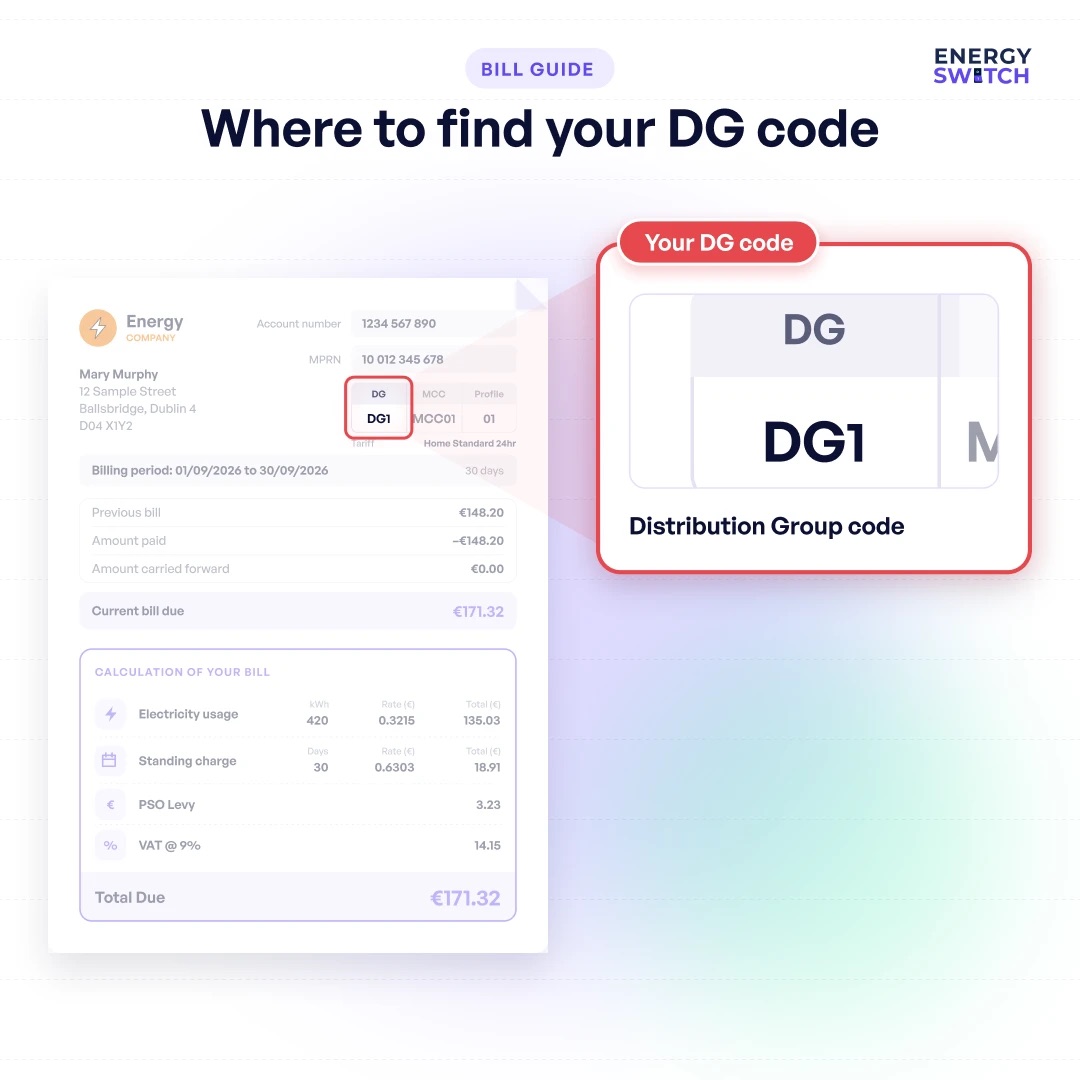
Look on your electricity bill
The simplest way to determine whether you’re urban or rural is by looking at your electricity bill. Check the account details section of your bill. The DG code is usually close to other information like your MPRN and MCC.
Contact ESB Networks
If you have your 11-digit MPRN (Meter Point Reference Number), you can contact ESB Networks at the National Customer Contact Centre on 1800 372 757. They will be able to provide you with your DG code and tell you if you’re urban or rural.
Ask your supplier
If you don’t have an electricity bill at hand, you can contact your electricity supplier’s customer service line. They will be able to provide you with the DG code for your property. You can also check whether you’re urban or rural on your online account with your supplier.
What difference does it make?
The main difference between urban and rural customers is the standing charge. Rural households almost always have a higher standing charge than urban customers. Some suppliers may also have different unit rates for urban and rural households, but this is rare.
When comparing prices, you need to make sure you select the correct answer for ‘urban or rural’ if you want accurate bill estimates.
FAQs
Do rural customers always pay higher standing charges?
In almost all cases standing charges are higher for rural households, but it depends on the electricity supplier.
Why are standing charges higher for rural electricity?
The higher standing charge covers the cost of maintaining the larger electricity distribution network for more spread out rural housing.
Does this affect which plans I can switch to?
No, electricity plans are not limited by where you live.
Was this guide helpful?
Your feedback helps us improve our guides.


